Fix the volume
Start from the drink rather than the shelf: 200 ml for a short run, 500 ml for a commute, 750 ml for a gym session, 1.5 to 2.2 L for a shift or a team bench.
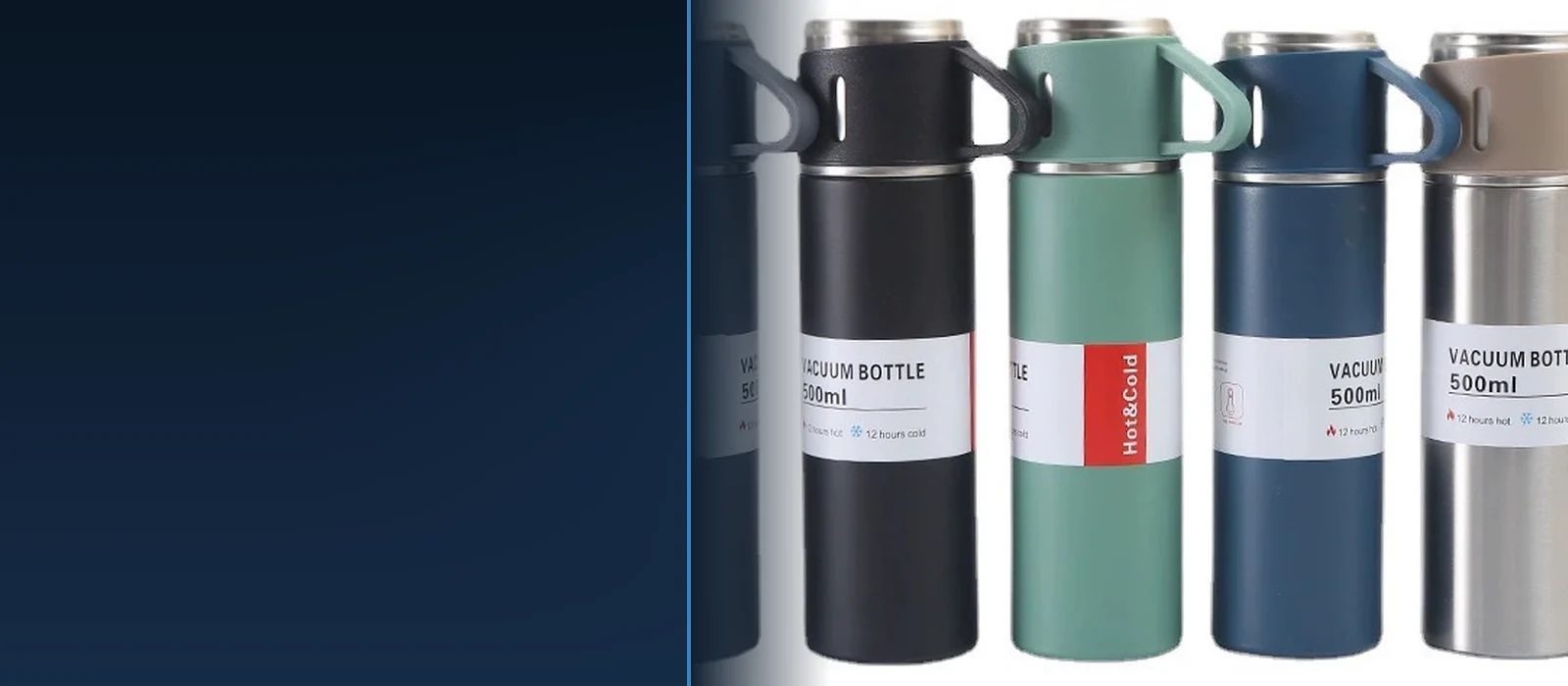
Capacity decides the mould, the carton and the freight line before a single colour is chosen. This guide walks the five bands we mould: 200 ml wrist flask, 350–500 ml, 600–750 ml, 900 ml to 1 L and 1.5–2.2 L, with the neck diameter and lid thread each one uses. MOQ is 500 pieces per style, and 180+ moulds are already on file.
Retail picks a size by shelf position, a club by how long the bottle has to last in a hand, and a promotional buyer by the carton count that fits a pallet. Those three answers rarely land in the same band, which is why the neck callout matters as much as the volume: a 500 ml bottle with a 38 mm neck takes a different lid, gasket and print wrap from a 500 ml bottle at 33 mm.
Start with the largest volume the end user drinks in one session, then check the carton. Cartons hold 40 to 60 pieces depending on model, so a 900 ml body at 40 per carton fills a pallet with fewer units than a 200 ml flask at 60, and that gap shows up in freight per piece long before it shows up in the moulding cost.
Each step takes one answer, and the fifth produces the per-piece landed cost.
Start from the drink rather than the shelf: 200 ml for a short run, 500 ml for a commute, 750 ml for a gym session, 1.5 to 2.2 L for a shift or a team bench.
Match that volume to a body on file. The nearest mould is almost always cheaper than a new tool, and 180+ shapes sit in the rack ready to sample.
Pick 28 mm, 33–38 mm, 43–48 mm, 53 mm or 63–89 mm, then lock the thread callout, because a 43/400 lid will not seat on a 48 mm neck.
Carton count runs 40 to 60 pieces by model. Confirm the filled weight before the packing list is written, since a heavy carton is a handling decision as much as a freight one.
Freight is quoted per cubic metre, so the final number is carton volume per piece rather than gross weight. Air and LCL price the same carton on different rules.
Neck callouts follow the 400-series convention, where the number before the slash is the neck diameter in millimetres and the code after it is the thread family.
A 400-series callout reads the neck diameter first: 28/410 for a 28 mm push-pull, 43/400 for a 43 mm screw lid, 63/400 for the wide mouth on a 1.5 L body. Two bottles can share a capacity and refuse to share a lid, so the thread is fixed with the mould rather than after sampling. Caps, gaskets and flip tops are stocked against those callouts.
Freight follows cubic volume more than weight. A 200 ml flask takes roughly 0.001 m³ of carton space, a 750 ml bottle about 0.0015 m³ and a 2 L body near 0.0035 m³, so per litre of capacity the flask costs around 2.5 times more to move than the 750 ml. LCL is billed per CBM and air on chargeable weight, so the two quotes on one carton rarely agree.
Carton counts run 40 to 60 pieces by model. A 1.5–2.2 L body fills a carton at 40, and the carton weight sets how the pallet is stacked, so those models are planned from a pallet diagram before the price is signed. A 40 ft high cube holds about 68 m³, which is roughly 45,000 750 ml bottles. Give us the port and the quantity and the freight line is built from that figure.
Send your specification, quantity and target market. We reply with a quotation, a sampling date and the carton count within 12 working hours.